Updated 2 July 2026
Solar is low-maintenance, not no-maintenance. A system that's never looked at slowly bleeds output to soiling, birds and undetected faults — and you only notice on the power bill. Here's the short list of what actually keeps panels performing, and how often to do each part.
Four things keep rooftop solar performing: monitor the output so you notice problems early, clean the panels once or twice a year, keep birds out from underneath, and have the array and electrics inspected periodically. None of it is onerous — but skip it and a system can quietly lose 20% or more of its generation without a single warning light.
A solar system has no moving parts, so it's easy to assume it looks after itself. It mostly does — until soiling, a bird colony under the panels, a failing isolator or a cracked cell starts dragging output down. Because the system keeps generating something, nothing alerts you; the loss just shows up as a creeping power bill.
Panels also degrade slowly by design, and Australian conditions — intense UV, summer storms, dust and heat — push everything harder. A little routine attention protects the return on what is usually a five-figure investment, and catches the cheap-to-fix problems before they become expensive ones.
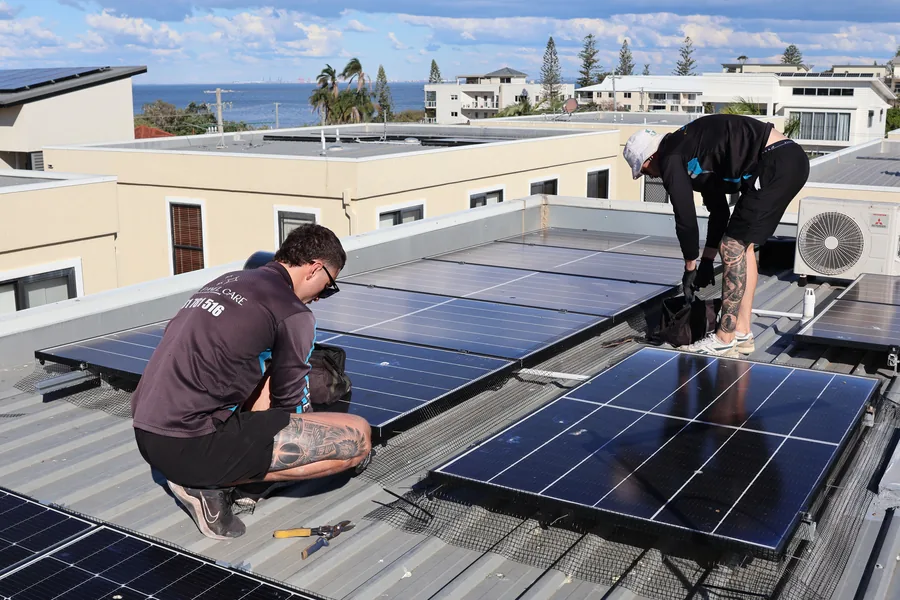
Everything worth doing falls into four areas.
Check your inverter app monthly. Compare this month to the same month last year — a sustained drop that isn't explained by weather is your early-warning system for soiling, shading or a fault.
Dust, pollen and droppings cost output. A clean every 6–12 months restores it — here's how to clean solar panels safely, or book a professional clean from $15/panel.
The gap under the panels is prime nesting space; droppings corrode and shade cells. Bird proofing with 304 stainless mesh closes the gap permanently and removes the single messiest maintenance problem.
Periodically check frames, mounts, cabling and the isolator for wear, and have any electrical work done by a licensed installer. Thermal imaging can find hot-spots and failing cells before they fail outright.
Thirty seconds in the inverter app. Is generation roughly where it should be for the season? Flag anything that's quietly fallen off.
Wash the panels (more often near the coast, dust, trees or birds). A visible jump in output afterwards tells you it was overdue.
A visual check of the array, mounts, cabling and isolator, plus a look under the panels for nests or droppings. Add bird mesh if anything has moved in.
Act on what monitoring and inspection turn up: a professional clean for heavy soiling, mesh installation for a bird problem, or a licensed electrician for any wiring or inverter fault.
Monitoring is all yours: watching the app costs nothing and catches most problems early. A careful panel clean is DIY-friendly too, if the roof is single-storey and safely reachable. Beyond that, height and electricity are the lines to respect. Bird proofing sits in the middle: on a low single-storey roof it can be a DIY mesh kit job; anything higher is ours.
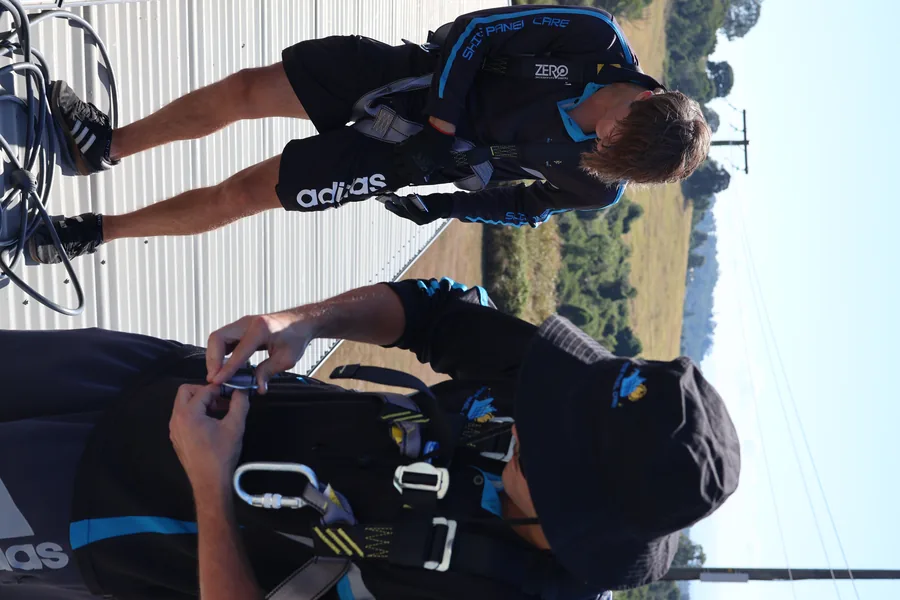
Anything involving the wiring, isolator or inverter is a licensed-electrician job, full stop. Steep or two-storey roofs, heavy soiling, bird infestations and thermal-imaging checks are all safer and more thorough with the right gear and insurance. We handle the hands-on side — cleaning, bird proofing and rooftop checks across Brisbane, Ipswich, Logan and Redcliffe — and every job is fixed-price up front with a photo report.
Yes — just not much. With no moving parts they're low-maintenance, but they still need monitoring, periodic cleaning, protection from birds, and an occasional inspection of the mounts and electrics. Neglected systems commonly lose 15–25% of their output to soiling and faults nobody noticed.
Glance at the app monthly, clean every 6–12 months, and do a fuller inspection once a year. Coastal, dusty, leafy or bird-prone sites sit at the more-frequent end of those ranges.
Typically a panel clean, a visual inspection of the array, mounts, cabling and isolator, a check under the panels for nests or droppings, and a generation check against expected output. Electrical testing is carried out by a licensed installer; thermal imaging can be added to find hot-spots.
You can do the monitoring and, on a safely reachable single-storey roof, the cleaning. Leave anything electrical to a licensed installer, and leave steep or high roofs, heavy soiling and bird infestations to an insured professional with the right equipment.
Correct maintenance protects it; bad maintenance can void it. Pressure-washing, walking on panels or drilling into frames are common warranty-breakers. Gentle cleaning and non-penetrative clip-mounted mesh keep both your panel and roof warranties intact.
Our $180 DIY kit ships Australia-wide with 30 metres of the same 304 stainless mesh we install professionally, the full clip set and a step-by-step guide. Product warranty included — the ladder and the labour are yours.
Cleaning, bird proofing and rooftop checks — fixed-price, insured, with a photo report. Brisbane, Ipswich, Logan and Redcliffe.