Updated 2 July 2026
Three very different products get sold as "bird proofing" for solar panels. One closes the gap permanently. One belongs on balconies and warehouses. One barely works at all. Here's the honest comparison.
For keeping birds out from under rooftop solar panels: purpose-made stainless steel mesh is the only option that closes the gap, survives Brisbane conditions, and doesn't harm the panels. Netting suits large open structures — not panel perimeters. Spikes and repellents don't address the gap at all.
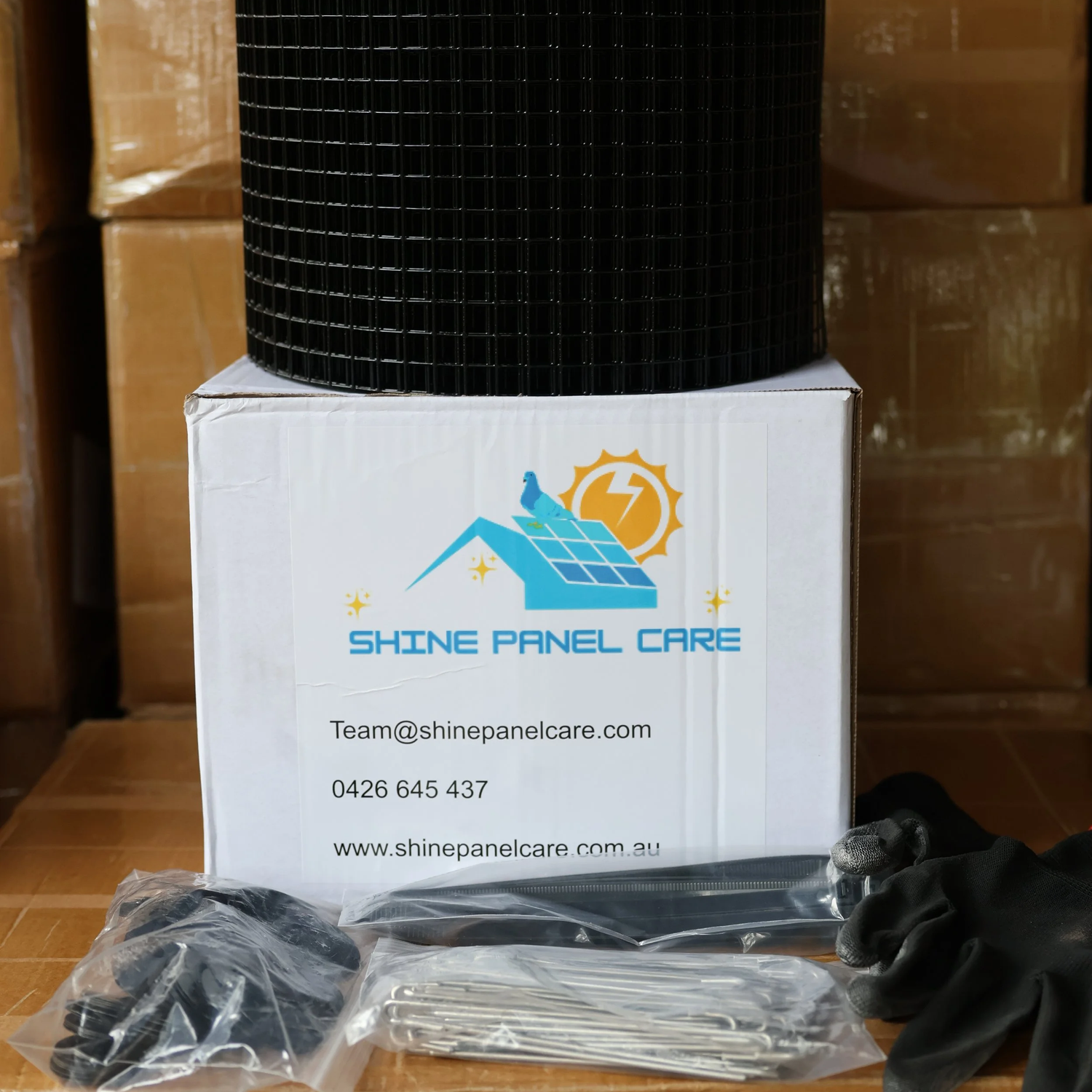
Bird mesh for solar panels is a rigid wire mesh cut to the height of the gap between the panel frame and the roof, clipped around the full perimeter of the array. Done properly, it physically excludes birds without touching the roof or restricting airflow under the panels.
The material grade is what separates a permanent fix from a temporary one. Hardware-store galvanised mesh starts to oxidise within 2–3 years in Brisbane's UV, humidity and coastal air — it stains the roof and sags open. Epoxy-coated 304 stainless steel is the correct specification: the same grade used in marine hardware. For grades, gauge and clip detail, see our full solar panel bird mesh buyer's guide.
Bird netting is a soft polyethylene or nylon net, usually tensioned across a frame or void. It has a legitimate place in pest management — balconies, warehouse eaves, loading docks, large open roof voids — anywhere you need to screen a big area cheaply.
For the perimeter of a solar array, it's the wrong tool. Netting can't be neatly fitted to the 100–150mm gap under panels, so installers end up draping it over or around the array, where it sags, flaps, and degrades under Brisbane UV within a few seasons. Birds get behind loose netting and become trapped against the panels — now you have a wildlife problem on top of a pest problem. Tangled netting also makes panel maintenance and cleaning harder.
Use netting for: large open structures, balconies, commercial voids. Don't use it for: sealing the under-panel gap on a rooftop solar system.
Bird spikes stop birds perching on the specific ledge they're mounted to — and that's all. They don't close the gap under the panels, so pigeons simply land next to the spikes and walk in. Gel repellents degrade quickly in Brisbane heat and can trap small birds. Plastic owls, reflective tape and ultrasonic devices rely on fear responses that pigeons habituate to within days to weeks.
These products treat symptoms. The attraction — a warm, sheltered, elevated nesting void — is still there. This is the same reason pigeons keep returning after you chase them off: nothing about the site has changed.
Closes the gap permanently. Decades of life in Brisbane conditions. No roof penetration when clip-mounted. Professional install from $23/m all-inclusive, or a DIY kit at $180 for 30m. The only option we warrant for 10 years.
Right for balconies, voids and large commercial structures. Wrong for solar arrays: can't seal the under-panel gap, sags and UV-degrades, risks trapping birds against the panels, and complicates maintenance.
Protect a single ledge at best. The under-panel gap stays open, pigeons habituate within weeks, and gels fail in Brisbane heat. Cheap upfront, but you keep paying because the problem never actually ends.
If your roof is single-storey with a low pitch and safe access, our DIY solar panel mesh kit ($180 for a 30m roll of the same epoxy-coated 304 mesh, with clips) is a genuine option — there's a step-by-step install guide to work from.
For two-storey homes, steep pitches, or if you'd rather it simply be handled: professional solar panel mesh installation is $23 per metre all-inclusive — nest removal, custom fitting at corners and cable entries, a photo and video completion report, the 10-year product warranty and a lifetime labour warranty.
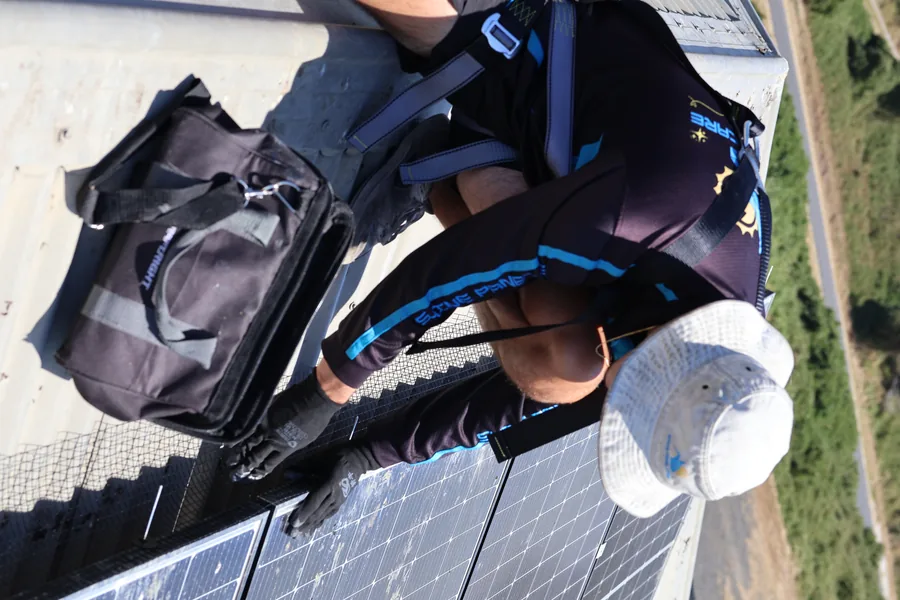
We don't recommend it. Netting draped over or around an array sags and degrades in UV, can trap birds against the panels, shades cells when it slumps, and makes cleaning and maintenance harder. Mesh fitted to the perimeter gap is the purpose-built solution.
Epoxy-coated 304 grade stainless steel, clip-mounted to the panel frame. Avoid galvanised wire (rusts within a few years in Brisbane) and avoid any installer who proposes drilling into your roof or panel frames — see the common bird proofing mistakes before booking anyone.
Not when it's clip-mounted. The clips attach to the panel frame without penetrating anything, so the panel manufacturer's warranty and your roof warranty stay intact. Drilling into frames or roof tiles is what voids warranties.
Yes — our DIY kit is $180 including GST for a 30m roll of the same 304 mesh we install professionally, with clips included. It ships from Brisbane in 1–2 business days — and here's how it compares to a Bunnings kit.
304 stainless mesh, no-drill clips, nest removal included. $23/m installed or $180 DIY kit.