Updated 2 July 2026
Hardware stores like Bunnings sell bird mesh and cable ties, and it's tempting to grab a roll and DIY it cheap. Will it actually keep pigeons out of your solar panels? Here's the honest comparison — what works, what fails, and where the money really goes.
You can block birds short-term with general-purpose hardware-store mesh and cable ties — but the material grade and improvised fixing are exactly what fail. Galvanised or aluminium mesh corrodes and sags, cable ties go brittle in UV and snap, and within a season or two the gap reopens. A purpose-made 304 stainless kit with frame-specific clips costs a little more and is built to outlast the panels.
Hardware stores stock general-purpose bird and pigeon mesh — usually galvanised steel or aluminium — in rolls, plus cable ties or generic clips. None of it is cut, coated or clipped specifically for solar panel frames, so you're buying raw materials and improvising the install.
For a determined weekend DIYer it's cheap and available today. The problems show up later, and they're always the same three: the wrong metal, the wrong fixing, and no guidance on the parts that actually matter — corners, cable entries and full-perimeter coverage.
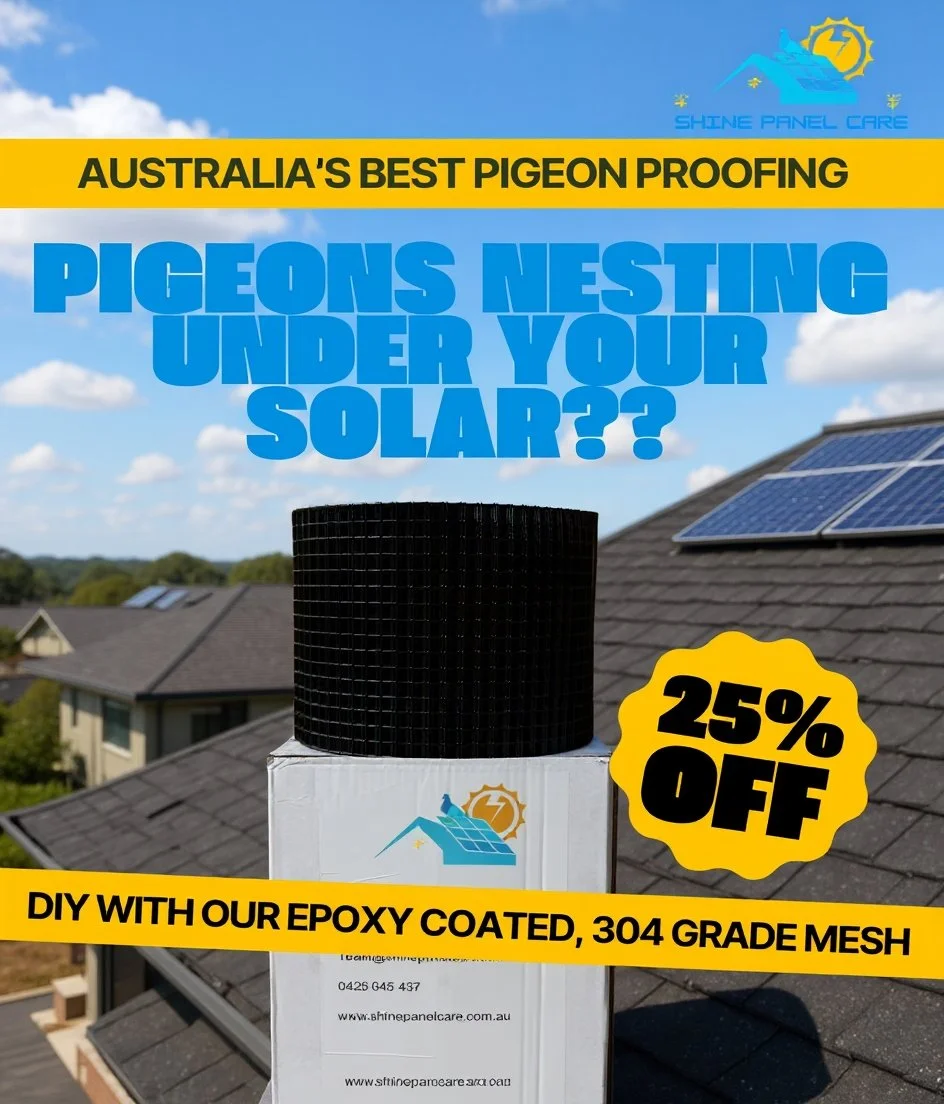
Our DIY solar panel mesh kit is the same epoxy-coated 304 stainless steel mesh we install professionally, supplied with the matching non-penetrative clips that grip the panel frame — no cable ties, no drilling. It's $180 including GST for a 30-metre roll (enough for a typical residential array), available Australia-wide and shipped from Brisbane within 1–2 business days — including Tasmania (see the Launceston solar panel bird proofing guide).
You also get a step-by-step install guide and a 10-year product warranty on the mesh and clips — neither of which comes in a hardware-store roll. If you want to understand the spec before you buy, the bird mesh buyer's guide breaks down grades, gauge and fixings.
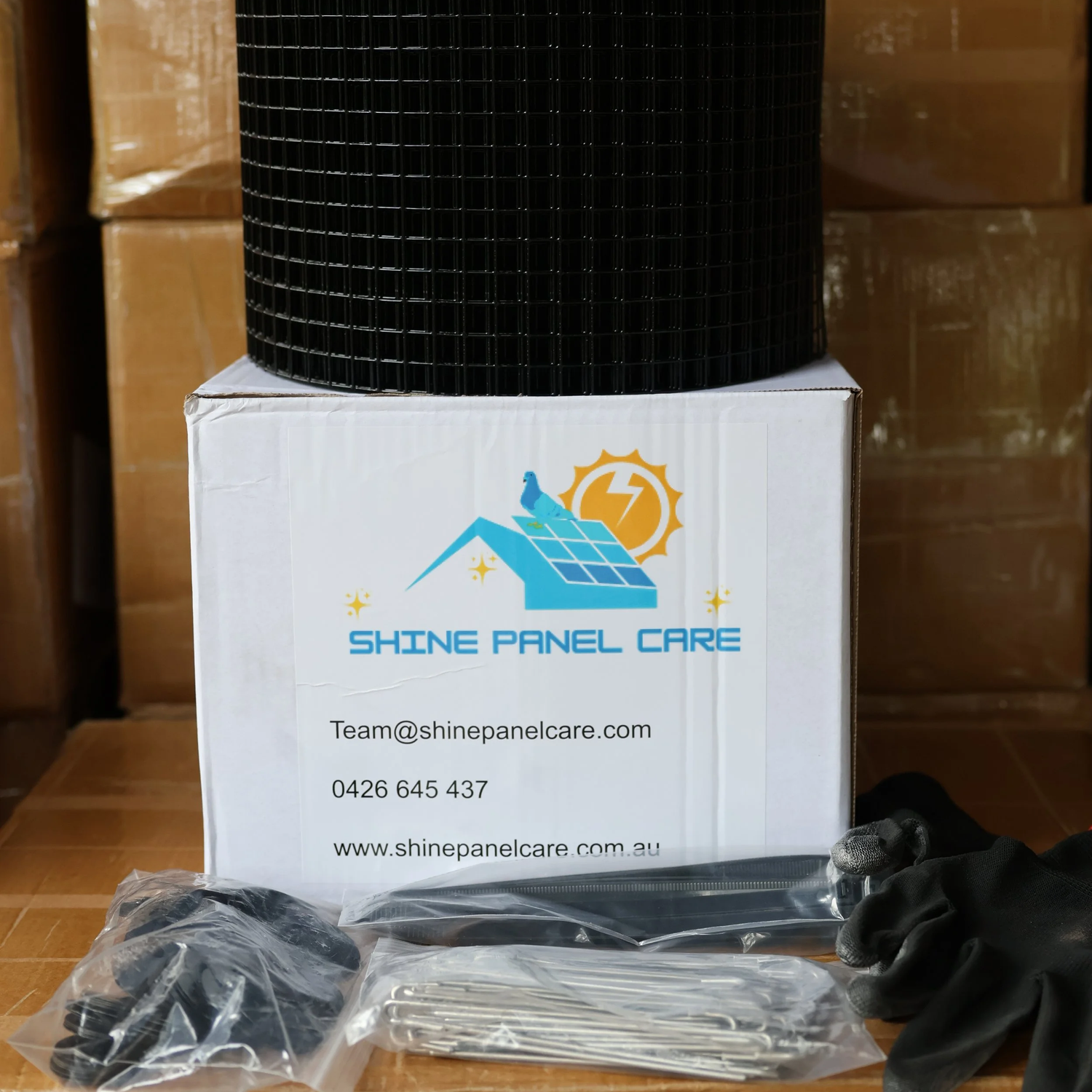
Hardware-store mesh is typically galvanised or aluminium — fine indoors, but it corrodes, oxidises and stains roofs outdoors. A purpose-made kit is marine-grade 304 stainless with an epoxy coat, rated for decades of Australian sun and salt air.
Cable ties are the usual hardware-store fix; they go brittle and snap in 1–2 summers, and the alternative — screwing clips into frames — voids panel warranties. Solar-specific clips snap onto the frame rail without penetrating anything.
A hardware roll looks cheaper on day one, but a re-do in two or three years — new materials plus another day on the roof — costs more than getting it right once. The purpose-made kit is $180, fitted once, warranted for 10 years.
If you're screening a shed vent, a balcony or a temporary gap and you don't mind redoing it, a cheap roll from Bunnings does the job. There's no need to over-spend on a short-term, low-stakes fix.
For the perimeter of a rooftop solar array, it's a false economy. The array is hard to access, the stakes are a recurring pigeon problem and a stained roof, and the failure points — corrosion and cable-tie breakage — are exactly where hardware-store materials fall down. That's the one place to use the right material, fixed the right way. If you'd rather not be on the roof at all, professional installation is $23 per metre fully fitted and warranted.
Hardware stores stock general-purpose bird and pigeon mesh — usually galvanised or aluminium rolls — plus cable ties and generic clips. It isn't cut, coated or clipped for solar panel frames, so you're buying raw materials and improvising the fit, with no solar-specific clips, guide or warranty.
We don't recommend it. Even UV-rated cable ties go brittle and snap within a summer or two in Australian sun, and once a few let go the mesh peels away and birds get back in. Clips that grip the panel frame rail hold the mesh without penetrating anything and without relying on plastic.
Not for a rooftop in Australian conditions. Galvanised wire oxidises and rust-stains the roof within a few years, and aluminium fatigues and distorts. Epoxy-coated 304 stainless is the grade that survives the UV, heat cycling and coastal salt without degrading.
For a solar array, yes. The $180 kit is fitted once and warranted for 10 years; a hardware roll usually means a second attempt within a few years — more materials and another day on the roof. Buying the right material once is cheaper than buying the wrong one twice.
304 stainless mesh, frame-clips, 10-year warranty. $180 DIY kit shipped Australia-wide, or $23/m installed across Brisbane.